Family: Pure crystallised carbon
Hardness: 10 / 10 · Crystal system: Cubic · Transparency: Transparent
Colour: Colourless, yellow, pink, blue, black
The diamond is the hardest gem nature has ever produced — a perfect score of 10 on the Mohs scale. It forms more than 150 kilometres deep, under extreme pressures and temperatures, before being brought to the surface by specific volcanic eruptions called kimberlite pipes. This exceptional geological origin gives it unique physical properties.
Formation and composition
Diamonds are composed of pure carbon, arranged in an extremely dense cubic crystal lattice. It is this three-dimensional structure that gives it its legendary hardness. It takes millions — sometimes billions — of years for a diamond to form in the Earth's mantle.
Brilliance and light
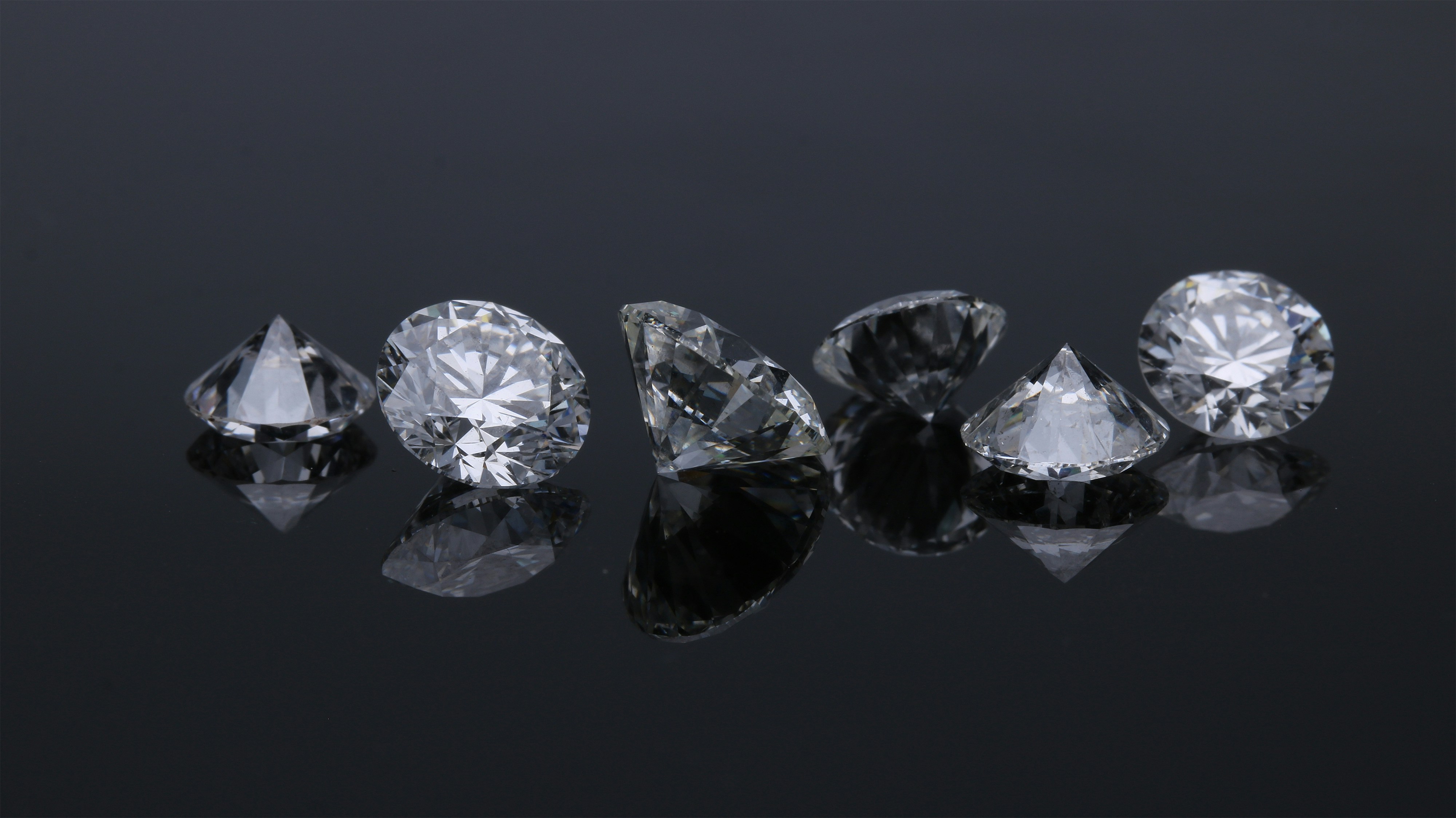
Its high refractive index (2.42) and strong dispersion allow it to break down white light into its constituent colours, producing those characteristic iridescent flashes that gemmologists call the diamond's "fire". The quality of the cut is the determining factor in unleashing this brilliance.
Fancy coloured diamonds
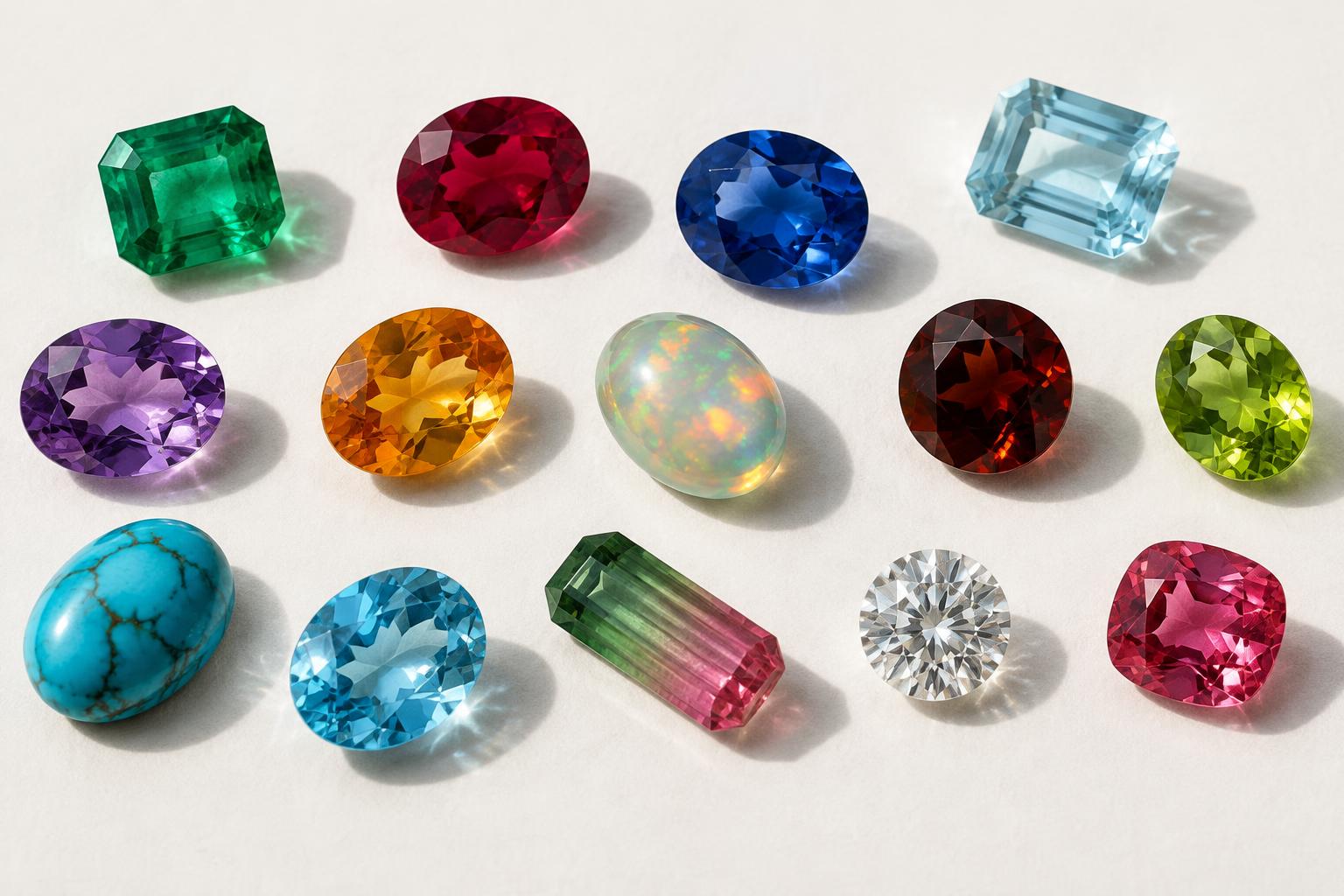
While white (or colourless) diamonds are the best known, coloured diamonds — known as fancy diamonds — are among the rarest in the world. Blue diamonds (such as the Hope Diamond) owe their colour to boron, pink to distortions in their crystal lattice, and yellow to nitrogen. Some absolutely rare red fancy diamonds fetch record prices at global auctions.
The 4 Cs — evaluation criteria
A diamond's value is based on four criteria standardised by the GIA: the Cut, which determines brilliance; the Color, graded from D (colourless) to Z (light yellow tint); the Clarity, which measures internal inclusions; and the Carat Weight. The cut is often considered the most important criterion for visual beauty.
Main geographical origins
- Russia (Siberia)
- Botswana
- Canada (Lac de Gras)
- Australia (Argyle mine)
- Angola
- South Africa
Cartographic note: Russia (Mir mine, Siberia) and Botswana (Jwaneng mine) are the world's top two producers by value. The Argyle mine in Australia was the primary source of pink diamonds before its closure in 2020.